The 48-Hour Head Start: Why Winning Crowdfunding Campaigns Are Decided Before Launch Day
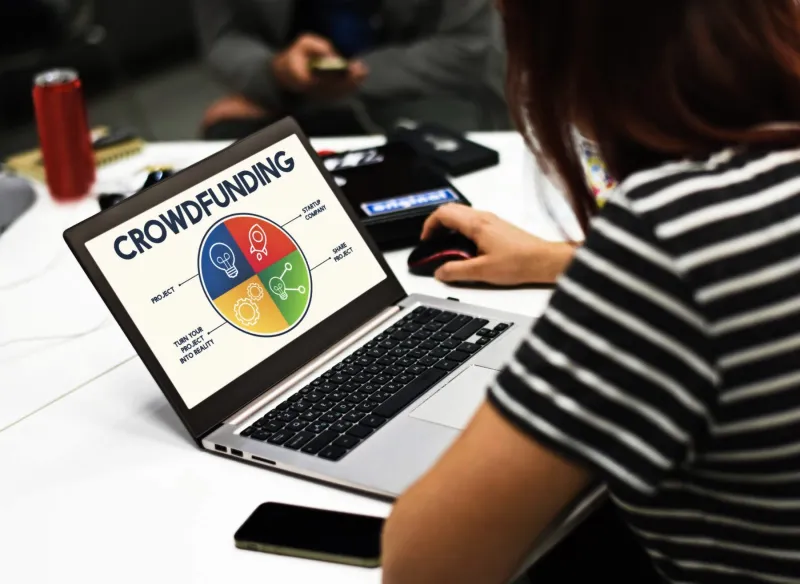
Photo: entrepreneur launching crowdfunding campaign on laptop with team celebrating, via cdn.ellulschranz.com
Ask most entrepreneurs how crowdfunding works and they'll describe a frantic month: launch the page, blast social media, pray the algorithm notices. That mental model is exactly why the majority of campaigns stall out at a fraction of their goal.
The reality, well understood by platform insiders and repeat founders alike, is that a crowdfunding campaign is essentially a scheduled reveal of work that was finished months earlier. The live 30 days is a victory lap — or a public stumble. Which one you get is largely determined before a single dollar changes hands.
The Data Behind the First 48 Hours
Platform operators have observed a consistent pattern across thousands of campaigns: those that reach roughly 30% of their funding goal within the first 48 hours rarely fail. The reason is structural, not mystical. Crowdfunding platforms surface momentum. A campaign that opens strong gets placement in 'trending' sections, earns editorial mentions in platform newsletters, and signals social proof to hesitant browsers.
That early surge doesn't come from strangers. It comes from a commit list the founder spent 30 to 60 days assembling — people who have already said, in writing, 'the moment you launch, I'm in.'
Building the Waitlist: Your Pre-Launch Asset
The foundational move is a simple landing page with a single call to action: join the waitlist. No product yet, no campaign yet — just a promise that early supporters will get first access and, ideally, a perk for showing up early.
The mechanics matter less than the discipline. Every conversation, trade show booth, newsletter signup, and local press mention should funnel into that list. A healthy rule of thumb for reward campaigns: you want a waitlist roughly three to five times the number of backers you'd need to hit 30% of your goal, because not everyone who signs up converts.
For equity crowdfunding, the math shifts but the principle holds. Reg CF issuers should be thinking in terms of investor commitments — soft-circle conversations where a person agrees in advance to invest a specific amount upon launch.
Warming the 'First Friends and Family' Commit List
Here's where most campaigns quietly die: founders assume their network will show up out of loyalty. Loyalty is real, but it is not a commitment until it's written down.
The playbook is straightforward. Two months out, build a spreadsheet of 50 to 200 people — friends, family, former colleagues, early customers, mentors — who could plausibly invest or buy on day one. Then work it like a pipeline:
- Personal outreach, not mass email. Individual messages or calls. A group blast reads as spam and gets ignored.
- A specific ask. Not 'support me sometime' but 'I'm launching on March 14. Would you consider a $500 commitment on day one?'
- A confirmation. A reply, a calendar hold, a signed pledge card. Something tangible you can count.
- A launch-day reminder. People are busy. Your commit list is worthless if they forget the date.
Campaigns that run this process convert a startling share of their commit list in the first hours, which triggers the platform visibility flywheel described above.
Press Seeding: Earning Coverage Before You Need It
Journalists will not cover a campaign that is already struggling, and they rarely cover one that just launched — their timelines are too slow. The workaround is press seeding: pitching the story 45 to 60 days ahead, when the angle is 'this company is about to do something interesting' rather than 'please cover my fundraiser.'
Target trade publications, local business journals, and niche newsletters before general outlets. A single well-timed feature published in week one of the campaign can deliver a second wave of traffic precisely when the initial commit-list surge is fading.
The Runway, Week by Week
A practical timeline for a US-based campaign:
- 60 days out: Landing page live, waitlist open, press list built, first outreach wave begins.
- 45 days out: Commit-list conversations underway, press pitches sent, early-bird perks finalized.
- 30 days out: Waitlist nurtured with behind-the-scenes updates; commit confirmations collected.
- 14 days out: Launch assets finished — video, financials, rewards tiers. Reminder wave to the commit list.
- Launch day: Coordinated push at a single hour. Commit list converts, waitlist converts, press begins landing.
- Weeks 2–4: Sustained content, mid-campaign press, direct outreach to lapsed waitlist members.
The Uncomfortable Conclusion
Crowdfunding is, in a sense, a popularity contest — but the vote is taken before the polls open. Founders who treat launch day as the starting line arrive at a race that ended weeks ago. Those who treat it as the finish line of a deliberate 60-day runway consistently join the small cohort of campaigns that hit 30% in 48 hours and never look back.
The good news: none of this requires money or connections. It requires a calendar and the willingness to do the unglamorous work while nobody is watching.