When Your Customers Become Your Capital: The Quiet Revolution of Community Rounds
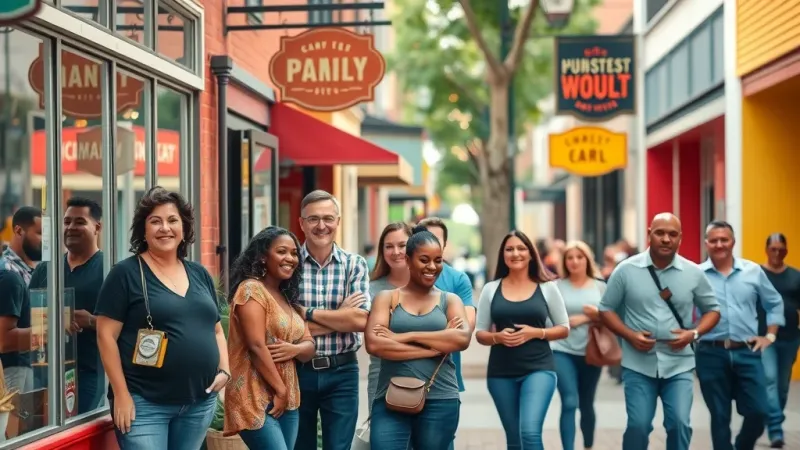
Photo: diverse small business owners celebrating with community customers in local shop, via houstonliving.us
There is a question every small business owner should sit with: who profits from your success? For most of American commerce, the answer is a bank collecting interest or a distant equity fund. A rising movement is changing that answer to something more interesting — the customers themselves.
Through Regulation Crowdfunding (Reg CF) and various intrastate exemptions, businesses across the country are raising $50,000, $500,000, even $5 million from the people who already buy from them. The trend deserves more attention than it gets, because it isn't just a financing tactic. It's a competitive moat.
Why Customer Capital Beats Bank Capital
Traditional lenders underwrite your past. Venture investors underwrite your future scalability. But your customers underwrite something neither can see: their own demonstrated attachment to what you've built.
Consider what happens when 300 regulars each put $500 into the neighborhood grocery co-op, the independent brewery, or the local fitness studio. Those investors are no longer merely patrons. They are owners with a financial and emotional stake in your survival. They will choose your business over a competitor. They will post about you, defend you in reviews, and drag friends through your door. Marketing budgets buy attention; ownership buys advocacy.
A bank gives you money and a payment schedule. A customer round gives you money and a sales force of hundreds who volunteered for the job. No traditional financier — and no venture firm — can offer that bundle.
The Regulatory Reality Check
This is not a gray-area arrangement. Since 2016, Reg CF has allowed US companies to raise up to $5 million per year from everyday investors, not just accredited ones. Intrastate exemptions in states like Texas, Georgia, and Michigan add parallel pathways for locally rooted raises.
But the guardrails are real, and they matter:
- You must use a registered platform for Reg CF raises — this is not a DIY handshake.
- Disclosure requirements apply, including financials and, for larger raises, reviewed or audited statements.
- Securities law is securities law. Selling ownership stakes to the public triggers obligations that don't disappear because your investors are loyal fans.
- State-level rules vary, so intrastate raises demand counsel familiar with your specific state's framework.
Budget for legal and platform costs up front. A well-run community round might carry $15,000 to $40,000 in combined setup expenses — material for a small business, but modest against the strategic payoff.
The Operational Playbook
A community round is a campaign, and campaigns require infrastructure:
Define the round honestly. Raise what the business plan needs, not what the crowd might give. Over-raising creates over-promising.
Structure the terms deliberately. Many community rounds use revenue-sharing notes or non-voting instruments that keep governance simple. Complexity is the enemy of a raise built on trust.
Segment your audience. Superfans, long-time regulars, and local business allies each need a different message. The pitch is not 'invest in a startup' — it's 'own a piece of the place you already love.'
Prepare for investor relations. Three hundred owners will expect updates. Commit to a simple quarterly communication rhythm before you launch, not after.
The Honest Caveats
Neutrality demands acknowledging the risks. Customer investors are unsophisticated; they may not grasp that small businesses fail. A struggling company that took money from its own community faces reputational damage that a bank loan never carries. And converting loyal customers into shareholders means your mistakes now have 300 witnesses with a financial stake.
Handled well, though, that same accountability becomes discipline. Community-funded businesses tend to run leaner and communicate better, because their capital structure demands it.
The Larger Point
For a century, American small business finance has been a choice between debt from institutions and equity from insiders. Community rounds dissolve that binary. They let the market that sustains a business also capitalize it — and they turn a customer base into something no competitor can buy: owners.
The businesses that figure this out first won't just raise money. They'll raise the bar on what local business loyalty looks like.